Good Health Is Wealth

If I had the option to choice between wealth and health, I will choose health.

Many will agreed with me here. But certainly some will not.

Health is wealth indeed. With good health, one has a strong body in which to go for and make wealth.

It is with a sound healthy mind and body that one can brainstorm and create all the natural resources one can imagine.

With this thinking, we need a good healthy foods,that is well prepared to sustain the body.

Not only this, but vigorous to moderate exercise that induced breathing and blood flow to carry oxygen and dissolved food nutrients in the blood stream all over the body.

Good health is wealth indeed.

Miebakagh Fiberesima
Showing posts with label mineral matters. Show all posts

Friday, 31 July 2015

Benefit Of Eating Varied Colored Fruits And Vegetables Part3

http://greens4food.blogspot.com

This is the final part of the story: the benefits of eating varied colored fruits and vegetables.

 Even so, let’s as usual take some review or summation of what we learnt so far in part 1 and 2 of this subject. 

In other words, let’s recall some of the main substances of those lessons.

 • A minimum of seven servings and a maximum of thirteen servings of fruits and vegetables is universal suggested per day along with breakfast, lunch and supper. These servings should be break down into any ratio say 3, 4 or 5. 

• This will prevent common ill health and benefit health. 

• The various colors in fruits and vegetables signifies the many and varied nutrients in the plants.

• As the color of the rainbow varied, so I and you should varied our intake of the goodies daily. These colors are red, orange, yellow, green, blue, indigo and violet. 

• Mixing all or some of those colors benefit health much than taking a single item of these colored fruits and vegetables. A one cup or 1g servings of each color green, red, yellow, white and blue each day is the require minimum of fruits and vegetables.

 • Take at least three colors: green-red-blue; or green-white-red; or green-orange-blue each day in variation if you cannot make the five color servings a day.

 • The essence of colors in fruits and vegetables is their photochemical or antioxidants. What is special about the antioxidants is their ability to prevent and fight diseases like cancer, heart attack, degenerating illness like memory lost and macular in old age. 

• Minerals and vitamins like C, K, flavonoids, work in synergy with antioxidants to destroy free radicals in the body. Fruits and vegetables in their unripe or semi ripe states are more potent in minerals and vitamins than in the ripe state. Even so slightly cooking them for at least two minutes benefits likewise.


• Fruits and vegetables being low in fats and proteins are cholesterol free and prevents circulatory relate illness like heart attack.

 • With the exception of brightly colored fruits and vegetables, low carbohydrates, and sugars and fibers in fruits and vegetables (FAV) prevent diabetes mellitus another circulatory problem.

 • This again means that these low and beneficial nutrient contents in the goodies have low Glycemic Index (GI) and hence low metabolic rate in the blood stream. The higher the GI of a brightly colored FAV, the faster the rate at which sugar or glucose is used up. 

Okay, let us continue with last part. 

Blue/Purple Colored Fruits And Vegetables Each color of a fruit and vegetable speaks or contain a unique health factor. Red colored fruits as we have seen are rich in lycopene. 

It also has quercetin. This helps to prevent and control prostate cancer in men and low blood pressure. 

Beta carotene, flavonoids, vitamin C in oranges and yellow colored fruits and vegetables maintain alkaline balance in the blood and works in synergy with magnesium and calcium in building healthy bones in the body. Green colored fruits and vegetables I realize is the parent color of all fruits and vegetables. Everything growing is first green. 

A shot newly spring up is green. Before a berry or tomatoes becomes ripe or red in color, it first shows up as a green colored berry. So a mature unripe mango can change its color from green to yellow or red. This can be said of oranges, guavas, papayas, apples and pears with the exception of green beans, pea, brussel sprouts, broccoli, etc. 

Hence, bioflavonoids are mostly found and plentiful in all green and unripe fruits and vegetables; and in a lesser degree in the ripe goodies. Phytonutrient or photochemical is what set fruits and vegetables apart from animals birds and fishes. These are the antioxidants in flowering plants. Some of the antioxidants that destroy free radicals in our bodies are sum up below. 

1. Quercetin: The antioxidant prevented LDL cholesterol oxidation and enable your body copy with allergens; lung and breathing disorders. It is found in apples, citrus fruits and onions for example. 

2. Ellargic acid: It acts as both an antioxidant and anticarcinogen in gastrointestinal tract. Found in walnuts, raspberries and strawberries. Beta-carotene is an ellargic acid. Beta-carotene is well known to resolve eye sight challenges. 

3. Flavonoids: In the group are anthocyanins, flavones and isoflavones. The antioxidant flavonoids gives fruits and vegetables its many and varied colors. It reduces inflation and stops tumor growth in cells. 

4. Bio-flavonoids: This is a sub-group of the flavoniods. It increases the value of vitamin C in the body; lowers cholesterol and benefits cholegen in the joints. 

5. Beta-glucen: includes EGCE in tea. It reduces colon and breast cancer in women; and boost the immune system. What makes blue fruits blue or blue berries blue? The answer is the photochemical anthocyanins and proanthocyanins. 

To feel healthy and young, eat blue or purple colored fruits and vegetables. Blue berry, black berry and black currant are some of the blue and purple fruits. As a boy, blue berry is my favorite. 

I even ate it in its wild form I can tell you right away that the wild spice of these fruits are much better than the inorganic type. 

They disease fighting antioxidants contain phenolics. They reduce cancer and Alzheimer’s in the elderly and is reputed to slow down the aging process. Eat blue berries and other blue and purple colored fruits and vegetables to reverse the trend. 

To your good health!

 Miebakagh57 (Miebakagh Fiberesima) Copyright 2014-2015

Wednesday, 29 July 2015

Benefits Of Eating Varied Colored Fruits And Vegetables Part1

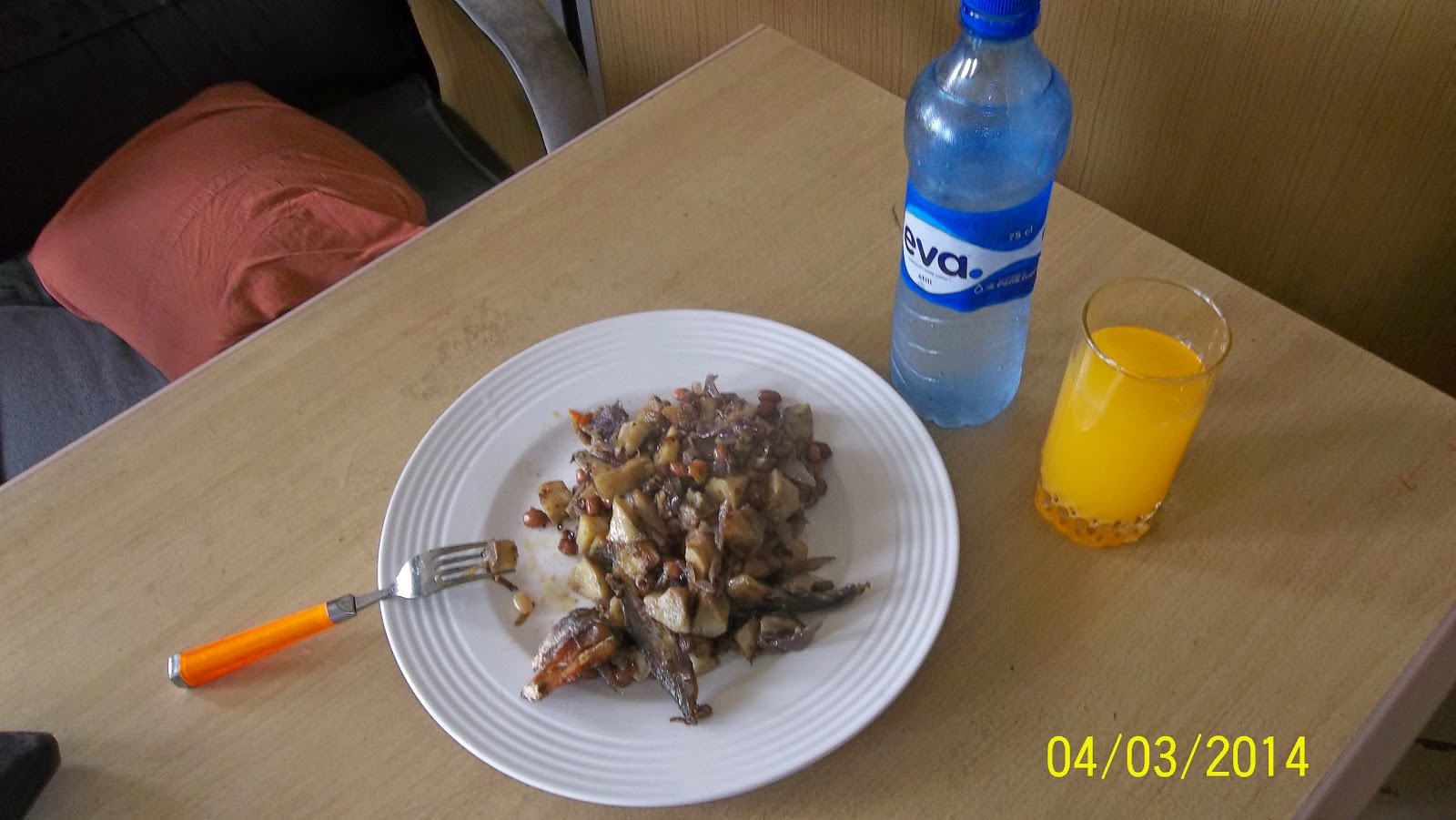
I eat at least six servings of fruits and vegetables each morning for my breakfast. Fresh sweet potato or yams in their skin, pumpkin leaves, garlic, ginger and green cayenne pepper or green chili; red chili, peanuts and onions.

The meal is either stewed or steamed or both. And I take this with some fresh fried sardines and mullets plus a cup of green tea.

Earlier on rising, I take a cup of dilute lime or lemon juice with a cup or half of cucumber fruit.

All the above mentioned foods with the exception of fish are plant products.

They are fruits and vegetables.

Potato or yam comes in yellow or red color. You can combine red, white and yellow source half a cup each. I mean red, white and yellow potatoes can be mix to get maximum benefit.

Each food color has differing nutrients and this is a fact. By combining such, photochemical from each source will boost your health.

 Pumpkin leaves in green. Garlic and ginger is white and yellow. Red chili is red. You can substitute pumpkin leaves with basil, mint, potato leaves or cocoyam leaves (only for cocoyams and stems). These are wonderful goodies from nature.

Alternately, I will take a plate of quick oats with banana, onions, peanuts, fresh red tomatoes with an egg as my breakfast and the plate of potato vegetable chop above as a snack.

Then, at lunch or after lunch, I will go for wild blue berries, pink cherries, guava and cucumber. Fruits in their seasons and in their many varied colors are taken into account. In fact, the rainbow color reminded me of how should I and you should mix our daily intake of fruits and vegetables no matter what.

At the end of the day, I had taken up to more than 13 cups of servings or more.

Naturally, we mix the carbohydrates, fats and oils and proteins to derive maximum health benefit from eating good food.

Why should not a person mix some fruits and vegetables in its many varied colors? Some authorities have recommended daily regular eating of fresh fruits and vegetables.

This is sure to prevent 95% of all case of common sickness and ill health. It also can speed up healing of wounds and bruises, especially after surgery and ill health.

 If you cannot make half of your chop plate fruits and vegetables; or take the five servings each day or the 7-13 cups per day, daily eating at least three differing fruits and vegetables in differing colors of green, orange and red especially; green, purple and pink, or blue, white and green etc can go a long way to benefit your health and well being in a wonderful way.

Fruits and vegetables are very low in carbohydrates, fats and proteins. Hence, they are also low in calories and preventing heart related ill health.

They are high in fibers, and had no cholesterol. In this instance too, help the bowels to do their work of moving both digested and undigested food matters as unwanted items out of the body.
Chronic disease is also prevented.

Color Of The Rainbow

The beautiful color of the rainbow depicted how many and various fruits and vegetables we should eat. It is amazing that the many different colors of fruits have differing functions to do for the human body.

The variety of colors also speaks about the many differing nutrients especially photochemical or antioxidants contained in the fruits and vegetables.

Red, orange, yellow, green and blue; indigo and violet speaks differing photochemical, vitamins and mineral matters.

The water content of each fruits again speaks another language.

For example, water in the cucumber fruits speaks the language of our skin and no more. 

Photochemical in the cucumber fruit will talk about the internal muscle joints of the legs and arms. Each different fruit and its color have its own language of health and healing properties.
I and you should eat them in its many varied colors.

Let’s take a look at some of these fruits in order of colors as said above.

Red Color Fruits And Vegetables: Fresh ripe tomatoes, sweet red potatoes, red chili, red onions and water melons; red apples, kidney beans, guava, straw berries and beets, will help your body fight diseases and promoted good health.

Anthocyanins are very powerful photochemical found in red fruits and vegetables.
These antioxidants are agents in the control of high blood pressure and circulatory related diseases of diabetes mellitus.

In fact, the fruits and vegetables list above when eat alone has no food value. They should be combined with two or more other fruits from another color background to be meaningful. I will attempt this again later. An example is already given above.

Hit! Very brightly colored fruits and vegetables no matter how beneficial have one or two hidden language which very few of us have realized so far.

Apart from their much health giving mineral salt, vitamins and fibers which we are all getting familiar with, some brightly colored fruits and vegetables (FAV) have high sugar or glucose content. 

For example, banana, carrot and sweet potato are very high in sugar.

Hence, the Glycemic Index (GI) of these food items is also high.

The GI is the rate in which sugar is absorb in the blood stream. If the GI of FAV is high, sugar is absorbed faster. If GI is low, sugar is absorbed slowly. So, FAV that are high in GI should be used sparsely on a daily basis alongside with any other FAV.

 Potatoes and potato chips, beets, carrots, parsnips and Swedes and water melon scores high GI.
Eat or use them sparsely.

A 1 cup or 1g servings of such FAV daily is not harmful. In a GI table, -50 is low. +50 is medium. + 55 is high.

All legumes have low GI.

All green leafy vegetables have low GI.

Fruits that appear green in color or are in a semi ripe state have low GI. For example, okra, green tomato, green chili, green pepper and green mangoes.

Go here for more information by copying and paste this link into your internet browser: www.glycemicgourmet.com/glycemic-index-table.html

Fruits and vegetables that constantly raise your blood pressure will make you a diabetes patient period.

Orange color: Oranges are commonly eaten by every person. Along with other citrus fruits, like lime and lemon, and tangerines and grape fruits, these fruits are  cold resisting resisting fruits.

Due to its vitamin C content, these are again anti scurvy. Less of this trend is seen since majority of us easily get a cold issue very easily. It is because these are eaten alone. Even when five of the citrus fruits end in a pack of juice, three-third of us easily gets a cold.

Why? Additive sugars and sweeter from chemicals in juicy that we constantly preferred.

But combine any of the citrus fruits with two or more other colored fruits and vegetables like tomatoes, banana, onions and will not let this happen; and your body will ward of a virus or cold. 100% fruit juice will deliver quality nutrient to your chop if you can get it in most beverage stores nearest to you.

Alternately, you should make your own fruit juicy at home.

With a good blender, three different fruit and a little water, you cut the items into the blender and turn on the AC.

In just a few minute, your juicy is ready to drink. This is how easy it is.

Beta carotene is another photochemical or antioxidant found in carrot, red palm kernels or palm oil, yellow fruits and vegetables.

Beta carotene fights cancer and heart diseases in every person. It is a nutrient for good eye sight. 

Another vital nutrient in yellow fruits and vegetables is bioflavonoids. Nearly all fruits and vegetables have some bioflavonoids.

But the best source in plants is green tea. That is the reason I recommend a plate of fruits and vegetables to go with a cup or two of green tea.

You get beta carotene in ripe mangoes, carrots and sweet potatoes.

Other sources are peaches, pumpkin leaves and cantaloupe.

Bioflavonoids can be gotten in papaya, pears, yellow peppers, pineapples and nectarines.

Now make a breakfast or snack with the following ingredients: cucumbers, broccoli,
pumpkin, papaya, peanuts and onions, garlic, ginger, green and red chili, guava and fresh ripe tomatoes.

Hit! Wash, cut and slice half cup each of cucumber, papaya, guava, fresh ripe tomatoes and pineapples into a chop fruit plate. Spread fresh lime juice on the papaya only. Chop the onions, garlic, ginger, green and red chili and put this in a frying pan with the peanuts. Add two tablespoonful of peanut or olive oil and put on low heat. Cook for only three minutes and add a pinch of salt stirring thoroughly all the time.

Take this along with the plate of fruits.

 To your good health!
Miebakagh57 (Miebakagh Fiberesima) Copyright 2014-2015

Monday, 27 July 2015

Fruits Are Man's First Food

Fruits are man's first food.

A fruit is any product of plants that contain a seed or nut but is edible and succulent.

This means it can be eaten raw,  ripe or semi-ripe.

Fruits come from different types of plants. Some authorities consider nuts and seeds like beans and peanuts as fruits.

Fruits being man’s first food before the addition of birds, fish and meat has vital protective role to play in the defense of the body against ill health. They can be eaten as breakfast, lunch and super too. Fruits and vegetables  also made a good snacks.

Mixed Fruits

Next time you are hungry after a breakfast or lunch, have some mix fruits and vegetables as a snack. A good mix can be made from papaya, guava, cucumber and pineapple.

I do not say you should subscribe to becoming a fruitarian or a vegetarian. But the minus side of becoming such out weights the plus side.

Fruitarian

A fruitarian or vegetarian subsists only on fruits and nuts. They is nothing wrong in this provide various fruits and high quality legumes, nuts and seeds forms a major combination in the diet.
Some authority have suggested that fruitarians and vegetarians should regularly add a glass of milk to their diet since their do not eat flesh meat of any kind. This has its merit too.

 The Parts Play By Fruit And Vegetable In Our body

Fruits play a very vital role in our bodies especially in the digestion of carbohydrates, fats and oils, and proteins.

They also have the function of protection and preventing disease in our body.

They have the vitamins and mineral matters to help in releasing energies in the foods we eat. I do not mean carbs, fats and oils, and proteins do not contain these essential nutrients. They do.

They help in bowel movement and much more.

 These carbs, fats and oils and proteins leave to themselves in the stomach are at times helpless. 

They could not help themselves in the digestive processes. Their need the help of fruits and vegetables to breakdown and released their energies into our body.

They movement in the bowel by peristalsis actions becomes possible because of the presence of fruits and veggies. Otherwise, the result will be constipation.

 Here some will suggested you should take a purgative to evacuate the waste matters in the bowels. 
That sounds good, and can result in side effects in some cases.

But a plate of fresh vegetables with fruits will work much better.

 Again, fruits and vegetables also contain phytochemicals, which serves to promote the health of the body.

The five servings of a fruit

the rule of the thumb that you take five servings of a fruit each day is getting outdated. Nevertheless, is is still vital.
.
The rule that you make half of your chop plate fruits and vegetables is out dated by the 7-13 cups or more servings each day.

Moreover, it has a serious role to play in diet and nutrition.The 7-13 cups is now the norm.

You should eat as much fruits and vegetables as much as you can each day. This will give your body an extra edge over colds issues, cancer risks, heart related diseases, type2 diabetes and fortify your body against certain ill health.

One serving of a fruit is 15 g. Therefore for 15 servings maximum 15x15x3.6 calories=810 calories. This is a plus to the carbohydrates, fats and protein content that goes with the plate of chop. 

Normally, a plate of a meal should contain 284g of carbohydrate (two differing sources say brown rice and bread fruit 85g), 57g fats and oils, 227g of protein; the remainder being green leafy vegetables 113g and non-leafy vegetables for example sweet potatoes 170g and fruits 57g. The computed calorific value from all this is 2600 calories for a person weighting 60kg.

I am not a fruitarian or a vegetarian. I do at times take differing mixed fruits and veggies including nuts and green bean plus some fried sardines and mullets for my breakfast or lunch. The presence of sardines and mullets ensures I have the essential omega fatty acids -3 and -6 in my diet period.

On a certain day which I call My Fruit Friday, I eat only fruit and veggies nothing more. Not even nuts are include.This serves to cleanse and rejuvenate not only my digestive system, but my entire body as a whole.

Now, how do you see to it that you get 13 cups of a fruit serving each day? Fruits are very plentiful during the harvesting periods. This is the best time to get them cheap.

You can buy up to 15 different fruits or more each week in their semi ripe state. 

A semi-ripe fruit has much nutritional content and value than a fully ripe fruit. That is why an unripe mango can prevent diabetes mellitus, but a ripe mango will cause your blood sugar to rise including your blood pressure to rise to some extends.

 You should take as much fruits and vegetables as you can include some fishes and nuts for breakfast, lunch or supper. After every meal, a handful of nuts should me munch. Your normal meal should contain 2/3 of its contents as fruits and veggies alone.

But get beyond the 7-13 cups level or servings each day.

All said, whether you take the traditional five servings or the present 13 servings a day, put much weight on greener fruits and vegetables..

They are very low in starch and have no sugar. Cucumbers, water melon, brussel sprout, all fruits that has a green coloring are low in carbs.

As in a traffic signal, red is a stop. You stop for a moment and then go. All fruits in red colors should be eaten occasionally. This is because they are very high in sugar. These will raise your blood pressure high above normal at certain times.

Nevertheless, mixed your greens with a tomato (tomatoes are fruits too) and any of your major greens is harmless. You can eat red fruits and vegetables daily with caution. This means you should take a piece of say red tomatoes or beets with other greens.

Amber or purple colored fruits like egg plant and pears as well as yellow colored ones like banana and apples should be taken with caution and a few at a time. Some bananas and apples are red skin and much thicker.

Wash Your Fruits And Vegetables Well In Fresh Water

Fruits and vegetables should be washed clean before preparing for eating.

They can be contaminated with diseases right from the farmland or from the market. A fruit buyer or seller with a cold flu can transmit the cold virus to the skin of the fruit or vegetable with just a touch. So wash all fruits and vegetables well. For example, a banana should be wash first in clean fresh water. Than immersed in a saline solution for just a minute or two before eating.

You should not soak it for over ten minutes, since the skin of a banana is not wax like a cucumber fruit.

It is only fruits that are wax that should be soaked for ten to fifteen minutes in saline water or solution before eating.

Vegetables should be wash well but do not soak them. Doing so will leach out their vitamin and mineral salt. Even their trace elements and phytochemicals are endangered in soaking them
overtime in water.

Chew your food properly before swallowing. 

This will prevent indigestion.

To your good health!

Miebakagh57 (Miebakagh Fiberesima)

Copy right 2014-2015.

http://greens4food.blogspot.com